jerseygirlbagelshop.com

  • Recipes
  • About

Classic Dark Chocolate Truffles

October 12, 2024 by Abigail Leave a Comment

Classic dark chocolate truffles.

These professional-grade truffles are so easy to make at home with just three ingredients! Premium dark chocolate blends with rich heavy cream to create a silky, luxurious ganache that is then rolled in cocoa powder.
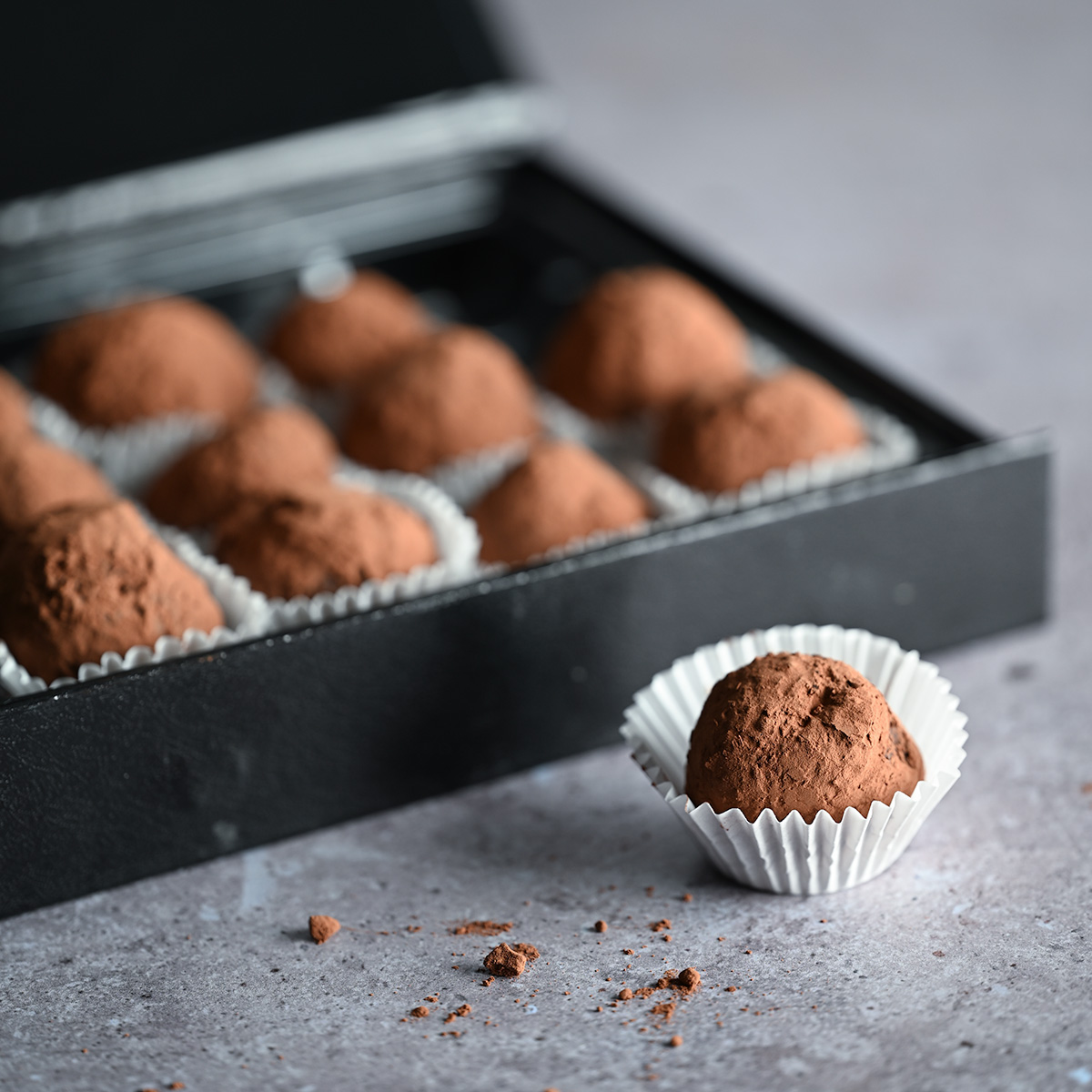
Classic dark chocolate truffles.

According to confectionary lore, chocolate ganache truffles first emerged in France on Christmas Day in the late 1800s, and have been a staple in chocolate shops around the world ever since.

No longer just a holiday gift, chocolate ganache truffles have been adapted thousands of times throughout the centuries, incorporating new ingredients and flavors that include coffee, tea, fruit, and nuts that create innovative truffle combinations.

But before you start experimenting with these more advanced variations, this recipe introduces you to the fundamentals of working with ganache in a focused exercise with professional, sophisticated results.

I’m also actively creating a ganache series in the “Tutorials” section of this site for when you feel like you’ve mastered the basics and are ready to create more advanced truffles (think infusions, enrobing, flavor and texture profiles, and more!), so stay tuned!
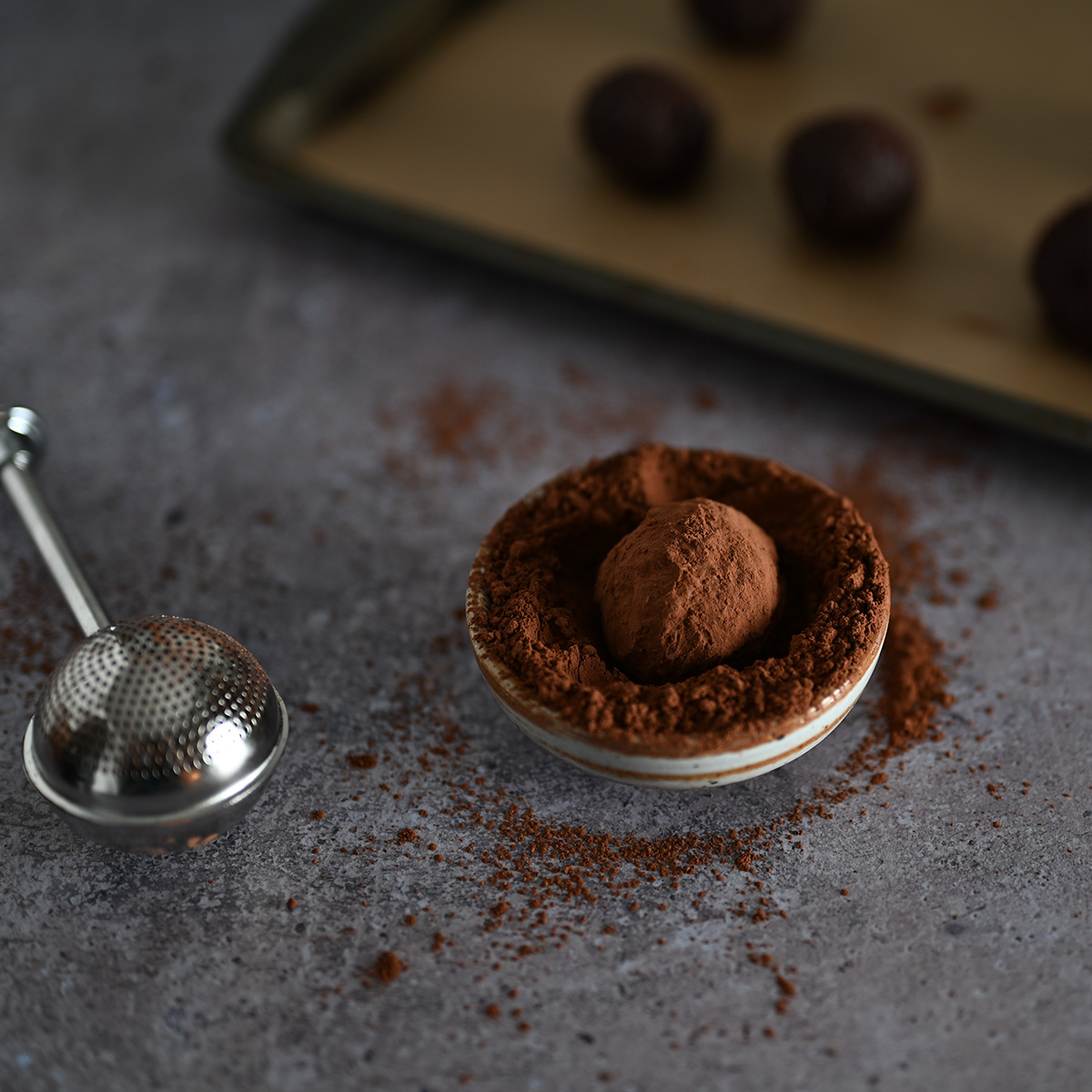
Rolling a classic dark chocolate ganache truffle in cocoa powder.

What is Ganache?

In its most popular form, ganache is typically an emulsion of chocolate and heavy cream, though milk, plant-based milk substitutes, and even fruit can be used. If using non-dairy alternatives, adjustments need to be made to the ganache’s fat-to-water ratio to stabilize the emulsion.

For simplicity’s sake, I don’t recommend using substitutions for this recipe since the fat-to-water ratio has already been properly balanced.

What Type of Chocolate to Use in Ganache?

Coverture chocolate, which is chocolate primarily used for molded chocolates, also yields the best ganache due to its higher cocoa butter content than real chocolate.

However, coverture is significantly more expensive than most chocolate, and you can get beautiful, creamy ganache at home by using your favorite brand of chocolate, so long as it actually contains cocoa butter. More accessible and more cost effective? Win-win!

I would NOT recommend using compound chocolate of any kind, including chocolate chips and melting wafers.

Not only does compound chocolate contain zero cocoa butter and instead substitutes using unhealthy vegetable oils, but it also contains ingredients that prevent it from fully melting (otherwise, your chocolate chip cookies would instead be a puddle of goo).

The result? Thick, gloopy, grainy ganache amid a sudden world of disappointment.

Why Chocolate Lovers Make This Recipe

  1. Three ingredient recipe — confectionary recipes don’t get much simpler or more affordable than this! You can find all of these ingredients at your local grocery store, and as long as you can melt chocolate and stir in cream, you’re ready to make your first batch!
  2. Timeless classic — thought to have first originated in France, these types of truffles can be found in chocolate shops all over the world due to their simple elegance and wide audience appeal.
  3. Great for gifts — the anticipation and satisfaction of giving someone you love a handmade gift of this caliber is truly special. Gift a box of these truffles next Valentine’s Day, Mother’s Day, or as an anniversary present that just might become a new tradition for you!
  4. Widely popular — many people are already in love with the scrumptious simplicity of chocolate truffles, so don’t be afraid to serve these at your next holiday party!

Ingredients and variations

Classic dark chocolate truffles are a timeless dessert that, at their core, come together with just three ingredients:

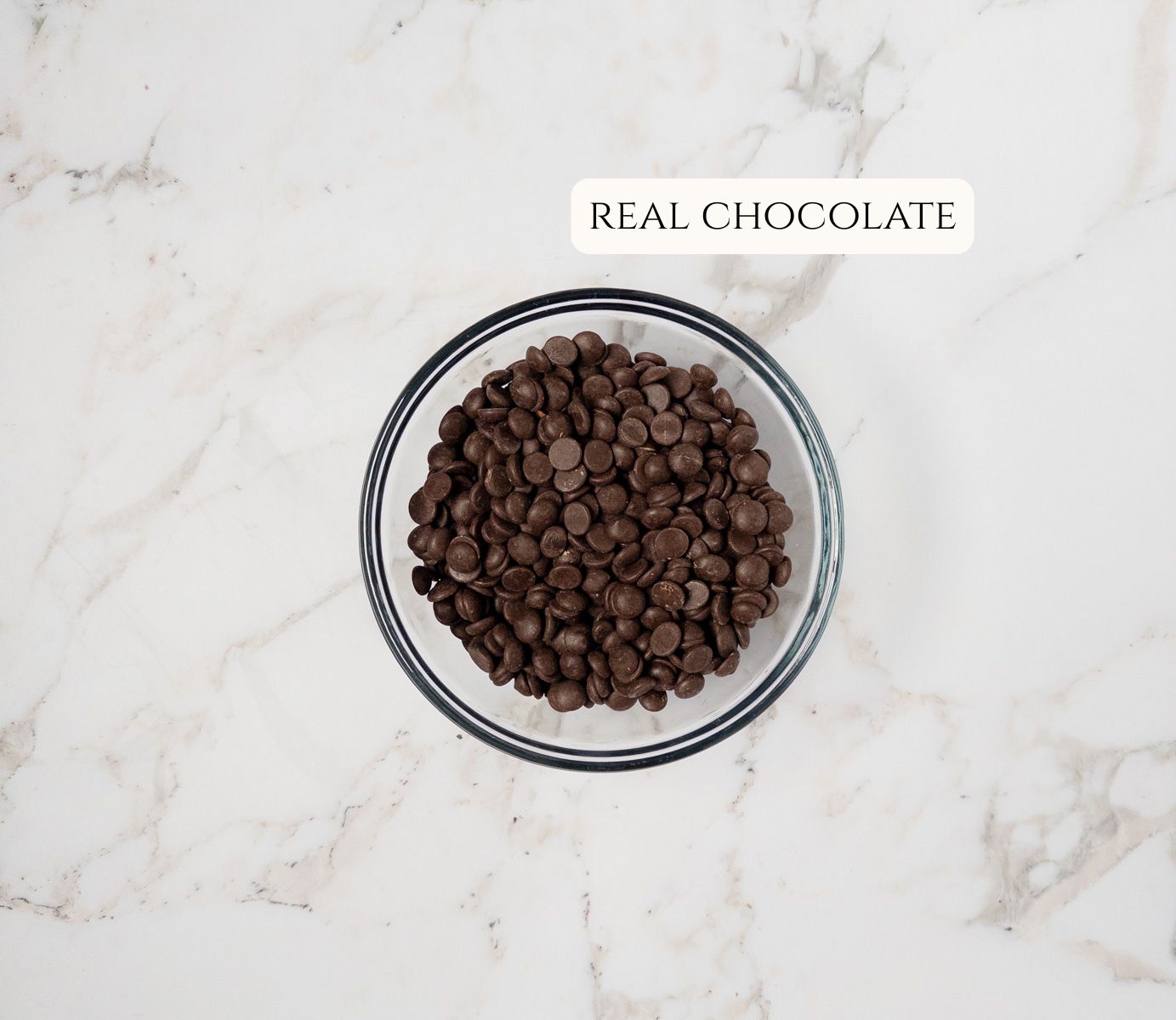
Real chocolate — the extra fat content from cocoa butter in real chocolate, rather than the oil substitute used in chocolate chips and melting wafers, help provide a creamier, richer ganache. Coverture chocolate contains even more cocoa butter than regular chocolate, and this is my preferred chocolate to use.

Heavy cream — many professional-grade truffles use heavy cream in their ganache due to its high fat content (36% fat). Fat lends to a more silky, creamy ganache, but adding too much can cause the ganache to split. The ratios provided in this recipe are balanced enough to keep your ganache tasting amazing from the first day.

Cocoa powder — technically ganache truffles are made with a minimum of two ingredients, but you never see “raw ganache” being sold as a finished product without some kind of decoration, be it cocoa powder, tempered chocolate, chocolate shavings, powdered sugar, sprinkles, or a variety of other toppings. This recipe uses cocoa powder for a timeless finish, but you can substitute with whatever topping you like.
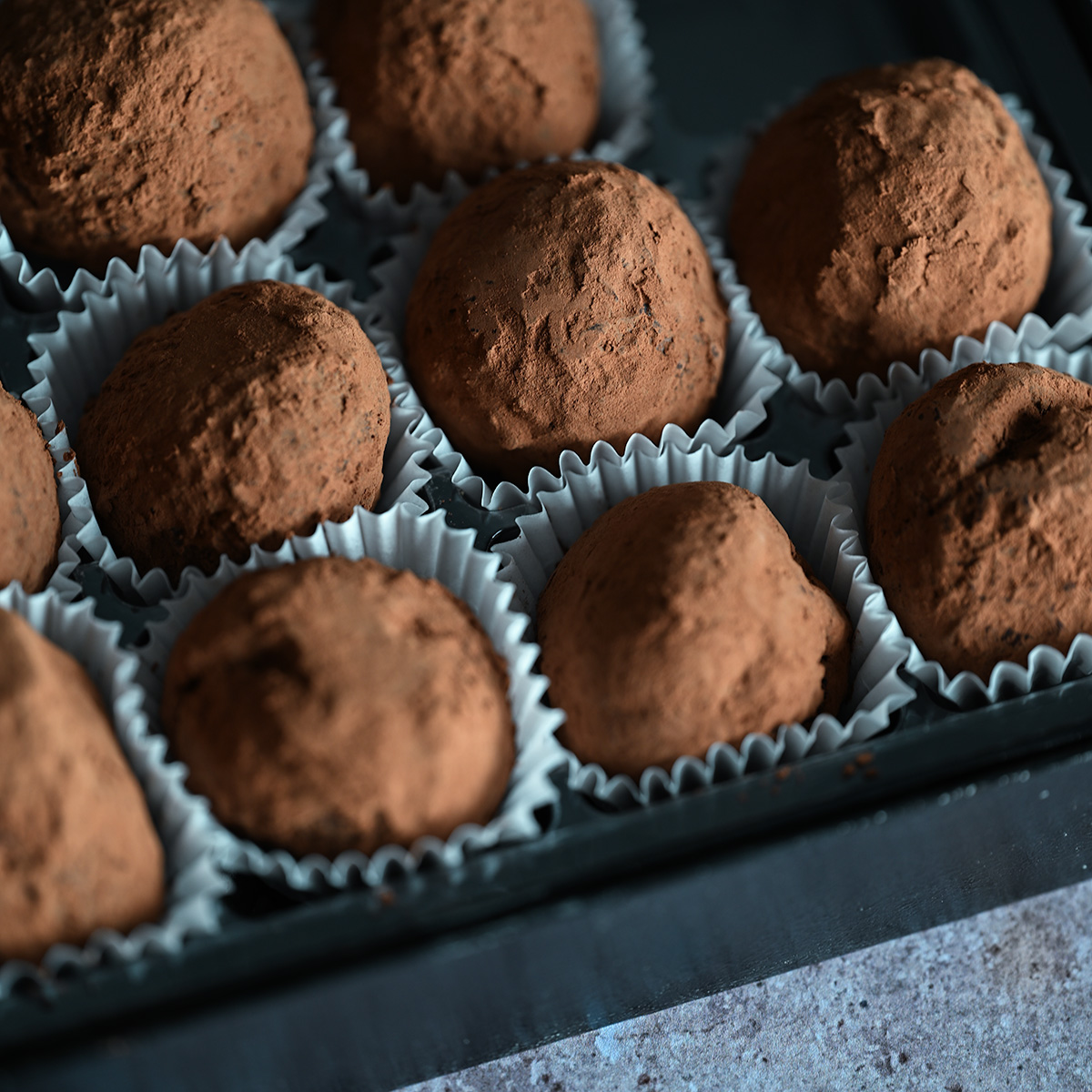
Macro shot of a box of classic dark chocolate truffles.

Tips for Success

  1. While many recipes call for you to pour the heated heavy cream over chopped chocolate, I have repeatedly found that this runs the risk of not melting the chocolate all of the way before the cream cools too much.

    Rather, melting the chocolate first before adding the cream provides more homogenous results from the start and greatly increases the success of your emulsion.
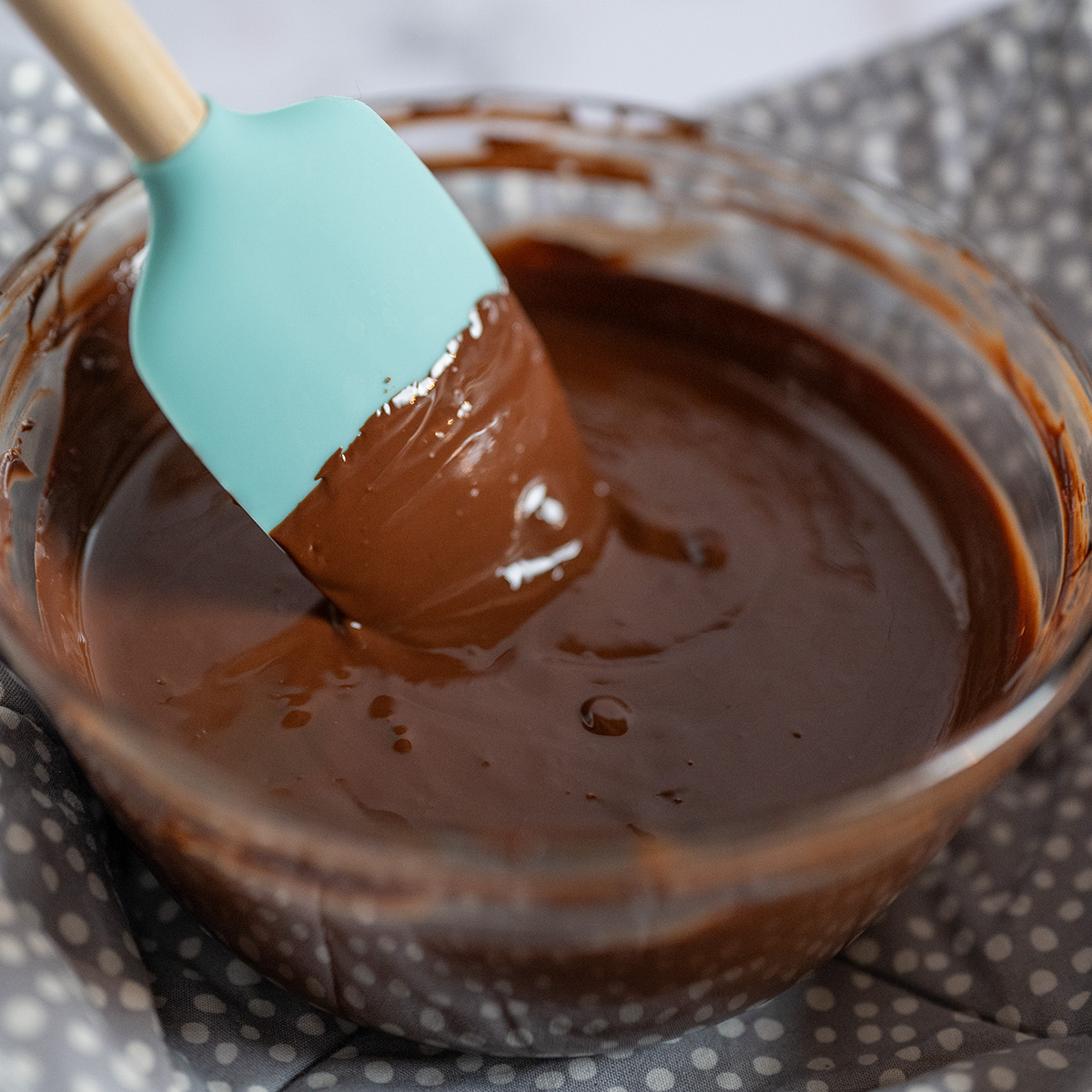
  2. To begin the emulsion, rapidly stir the mixture in small circles, starting from the center of the bowl and working your way outwards, gradually increasing your circles’ circumference. As you stir, you will start to see the emulsion taking shape by the cream suddenly resembling glossy frosting or brownie batter– keep stirring until the entire mixture is thick and glossy (the below video shows you the final texture).
  3. Contrary to many other recipes, ganache should set in a cool, dry place between 60-70 degrees Fahrenheit, rather than being left to chill in the fridge. Allowing the ganache to set and crystallize in the fridge risks unnecessary exposure to moisture, shortening the ganache’s texture and shelf-life.

Storage and Reheating Instructions

Since this truffle recipe does not involve enrobing the ganache in tempered chocolate, the ganache will have to be stored in an airtight container (to reduce moisture) and stored in the fridge.

When ready to serve, first allow the truffles to sit on the counter for 15-20 minutes to soften the ganache for the creamiest texture.

Video

Classic Dark Chocolate Truffles
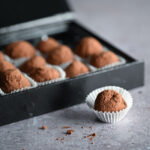
These professional-grade truffles are so easy to make at home with just three ingredients! Premium dark chocolate blends with rich heavy cream to create a silky, luxurious ganache that is then dusting of cocoa powder.

  • microwave-safe bowl
  • rubber spatula
  • small saucepan
  • small bowl
  • small sifter
  • teaspoon
  • sheet parchment paper
  • 8 ounces premium dark chocolate
  • 4.5 ounces heavy cream
  • Dutch-processed cocoa powder, for rolling
  1. Finely chop the chocolate and add to a microwave-safe bowl. Heat the chocolate in the microwave in 30-second intervals on 50% power, stirring in between, until fully melted.

  2. In a small saucepan, heat the cream until small bubbles form around the edges, or until a food-grade thermometer registers around 125℉ for dark chocolate. Pour the cream over the melted chocolate and allow to sit undisturbed for 1 minute.

  3. Starting in the center, use the rubber spatula to stir in small, rapid circles to start the emulsion of cream and chocolate until it goes from looking like chocolate milk to glossy chocolate frosting. Continue stirring in larger circles until the entire mixture is thick and glossy, 1-2 minutes more.

  4. Tightly press a strip of cling film against the ganache to prevent a skin from forming. Set aside for 2 hours in a cool, dry place.

  5. Add Dutch-processed cocoa powder to a small bowl. Use a teaspoon to scoop out the ganache and roll into a smooth, round ball between your palms. Roll in the cocoa powder and place finished truffles on a sheet of parchment paper. Repeat until all the ganache has been used.
Filed Under: Chocolate Confections, Ganache, Mousse, and Sauce

Tempering Chocolate

October 1, 2024 by Abigail Leave a Comment

A glass bowl of tempered milk chocolate.

Everything you ever wanted to know about the most essential skill when working with chocolate! I will show you how to make perfectly tempered chocolate that has a bright shine, great snap, and delicious texture, every time!

A glass bowl of tempered milk chocolate.

I know that tempering might seem really intimidating at first, but I’m here to help simplify the process so that you get exquisite results again and again! I want you to feel confident the next time you make homemade chocolates or prepare snacks that the whole family can enjoy.

Get all of your tempering questions answered below, or ask me directly in the comments!

What Is Tempering Chocolate?

Chocolate is made up of cocoa mass (the actual ground up cocoa beans) and cocoa butter. Tempering chocolate solely focuses on cocoa butter.

Without delving too much into molecular science, tempering chocolate is the process of melting cocoa butter crystals and restructuring them into their most stable formation (known as “Beta-5 crystals” or “Form-V crystals,” for you fellow nerds out there) ;).

Now, what does that mean in practice?

Well, if you ever had chocolate that:

  • had an ultra-shiny finish
  • had a smooth, creamy texture
  • had a clean, firm snap when broken into pieces
  • didn’t easily melt in your hand

Then you’ve already reaped the benefits of tempered chocolate!

Why Temper Chocolate?

Tempering chocolate is a necessary part of any confectionary work. You cannot make bars, bon bons, or many other chocolate treats without properly tempering the chocolate first. Using either improperly tempered chocolate or only melted chocolate won’t work. Some problems that can arise include:

  • bon bons won’t easily retract from their molds
  • the final product will bend and have either streaks or flecks (known as “fat bloom,” where yellow or white cocoa butter globules mar the chocolate’s surface)
  • the chocolate can be crumbly and smear on your hands and other surfaces

Do I Always Need to Temper Chocolate?

Fortunately, no! If the chocolate’s final importance is unimportant to the recipe, or if the chocolate needs to be shelf-stable and not melt or smear when eaten, then it won’t need to be tempered.

On the other hand, all molded chocolates will need to be tempered. In fact, 100% of “real” chocolate that is commercially available is tempered, so it is a foundational skill to master when working with chocolate.

To that end, “real” chocolate is defined as any chocolate product that contains cocoa butter instead of oil (known as “compound chocolate”). All types of chocolate containing cocoa butter can be tempered: white, milk, dark, ruby, and other types. Even regular cocoa butter can be tempered!

If you read “oil” anywhere in the ingredients on a package of chocolate, that chocolate cannot be tempered. Melting wafers and chocolate chips, while a common and affordable “chocolate,” are actually compound chocolate and cannot be tempered.

How to Temper Chocolate

Tempering is the process of heating chocolate to melt all existing cocoa butter crystals, then gradually cooling it to allow new crystals to form, then gently reheating the chocolate again to maintain the new, stable crystal growth.

The precise temperatures needed for this heating and cooling process vary by the brand of chocolate, so check your chocolate’s packaging to see if the temperatures are listed. These temperatures will be represented as a “tempering curve,” which looks like a line graph:

However, if you don’t see a tempering curve listed, the following temperatures can be used:

Chocolate TypeMelting TemperatureCooling TemperatureTempered Temperature
Dark Chocolate113 F-123 F80 F87 F-89 F
Milk Chocolate113 F80 F84 F-86 F
White Chocolate113 F80 F84 F-86 F

Methods

Tempering is usually done one of two ways: the “seeding” method and the “tabling” method. Each one produces the exact same results, so it really comes down to a matter of personal preference.

Seeding Method

The “seeding method” gets its name because once we melt down chocolate, we also melt down all of its cocoa butter crystals, creating weak, bendable chocolate with a poor shine and texture. As such, we have to reintroduce stable cocoa butter crystals to the chocolate in order to temper it.

“Seed chocolate” simply refers to adding already-tempered chocolate that contains stable cocoa butter crystals to melted chocolate to help temper it.

Whenever you use the seeding method, measure out an additional 20-25% of the weight of the chocolate being tempered and set aside. This is your seed chocolate.

Steps

  1. Reference the chocolate’s packaging for precise temperature instructions for that particular brand and type (white, milk, or dark), if listed. If it’s not listed, please reference the tempering table above according to the type of chocolate you are using.
  2. Heat chocolate to its melting point so that all existing cocoa butter crystals melt.
  3. Add a small quantity of existing (i.e., already tempered) chocolate to cool the chocolate and introduce beta-5 crystals that will begin to multiply. Add all of the seed chocolate.
  4. Gradually cool the chocolate by stirring constantly until it reaches its final cooled temperature.
  5. Gently warm the chocolate in either the microwave or over a double boiler to the final temperature labeled on the package.

Tabling Method

This technique is usually practiced by experience chocolatiers due to its faced-paced nature and reliance on visual cues from the chocolate, which take a while to learn.

Rather than using seed chocolate, this method relies on reserving one-third of the melted chocolate while the remaining two-thirds gets poured onto a cool, hard surface and worked with a chocolate scraper and offset spatula until the chocolate cools to 80-degrees Fahrenheit. The chocolate is then scraped back into the bowl of reserved chocolate, stirred, and should now be ready to use.

  1. Reference the chocolate’s packaging for precise temperature instructions for that particular brand and type (white, milk, or dark). If it’s not listed, please reference the tempering table above according to the type of chocolate you are using.
  2. Heat chocolate to a high enough temperature that melts all existing cocoa butter crystals.
  3. Pour two-thirds of the melted chocolate onto a clean and DRY marble slab. Use a chocolate scraper and an offset spatula to push the chocolate around to rapidly cool and assist with proper crystal formation.
  4. Once the chocolate has reached its recommended cooling temperature, scrape it back into the bowl and then continue to stir until the chocolate reaches the final working temperature listed on the package.

Can Any Chocolate Be Tempered?

No! Only chocolate made up of cocoa butter and cocoa solids (aka, “real chocolate”) can be tempered. Most candy wafers, chocolate chips, and other such “melting” chocolate are made with vegetable oil instead of cocoa butter, so these cannot be tempered since there aren’t any cocoa butter crystals to form.

Ingredients

Ingredients needed to temper chocolate.

Chocolate, any one type — Again, only use real chocolate since it contains cocoa butter crystals (whereas compound chocolate, like chocolate chips or melting wafers, don’t contain any cocoa butter). Coverture works best for the creamiest, shiniest finish, such as Callebaut (pictured above) or Valrhona, among others.

Tips for Success

  1. Never, ever let water or any type of moisture touch the chocolate. Doing so will make the chocolate seize, and there is no way to remedy this one it occurs, and the chocolate will have to be discarded.
  2. It is much easier to keep a large quantity of chocolate in temper, as a smaller quantity cannot retain as much heat and thus cools much faster. For this reason, when working in bulk, use far more chocolate than you actually think you will need. Some recommend tempering no less than three pounds (roughly 1.3kg) at a time, but this is a matter of personal preference.
  3. Whenever possible, use coverture chocolate for its higher cocoa butter content. Coverture chocolate is used exclusively in molding chocolates, adds a spectacular finish and texture to hand-dipped confections, and makes ganache even silkier.
  4. You can choose the melt the chocolate either in the microwave or on the stovetop using a double-boiler.
  5. If using the microwave, heat in 30-second intervals and stir in between to ensure you don’t scald the chocolate, which will have to be discarded.
  6. Always test your temper before using the chocolate; you don’t want to discover an incorrect temper only after you’ve made (or gifted or sold!) the chocolate before it has fully crystallized. To test your temper, dip the tip of an offset spatula or a butter knife and set aside for 2-3 minutes. Properly tempered chocolate will have a smooth and glossy appearance with a crisp snap. Streaks, flecks, dullness, or a gray appearance indicate an improper temper.
  7. Don’t throw out any improperly tempered chocolate! Repair it by returning the chocolate to its melting temperature and begin the tempering process again, again checking your temper before use.
  8. While you work, periodically check the chocolate’s temperature in the bowl to ensure it’s still in temper. If it has cooled, gently rewarm in the microwave, over a double-boiler, or even with a heat gun (a new hair dryer works just as well)! If the chocolate is too warm, continue gently stirring to help cool.

Detailed Preparation Instructions (Seeding Method Only)

In either the microwave or a double-boiler, slowly melt the chocolate, stirring frequently for even heating.

Using the seeding method, remove the bowl from the heat and toss in 1-2 handfuls of coverture pistoles into the melted chocolate. Stir continuously from here on out until a thermometer registers the recommended temperature on the chocolate’s packaging.

Using either a heat gun, microwave, or a double-boiler, gently heat the chocolate to the final temperature listed on the packaging.

Dip an offset spatula into the chocolate to test its temper. If it sets quickly and comes out smooth and shiny, it’s ready to use!

Storage and Reheating Instructions

Roll out a long sheet of cling film and pour any unused tempered chocolate on top. Wrap tightly and store in a cool, dry place until ready to use. Chocolate without “inclusions,” or other ingredients, lasts indefinitely when properly stored.

Tempering Chocolate

Everything you ever wanted to know about the most essential skill when working with chocolate! I will show you how to make perfectly tempered chocolate that has a bright shine, great snap, and delicious texture, every time!

  • digital scale
  • heatproof bowl
  • rubber spatula
  • infrared thermometer or candy thermometer
  • offset spatula
  • 500 grams real chocolate, chopped or in pistoles (plus 125g more of the same chocolate, if using the seeding method)
  1. Completely melt the chocolate in the microwave or a double-boiler until it registers the temperature listed on either the packaging or the above table on a food thermometer.

  2. Toss in the seed chocolate and stir until melted. Consistently fold and stir the chocolate to help cool it until a thermometer registers the recommended temperature on the packaging.

  3. Using either the microwave or a double-boiler, gently reheat it to the recommended temperature on the packaging.

  4. Test the temper by dipping an offset spatula into the chocolate. If it sets quickly and comes out smooth and shiny, it's ready to use!

Filed Under: Tutorials

Perfectly Thick Chocolate Milkshake

September 30, 2024 by Abigail Leave a Comment

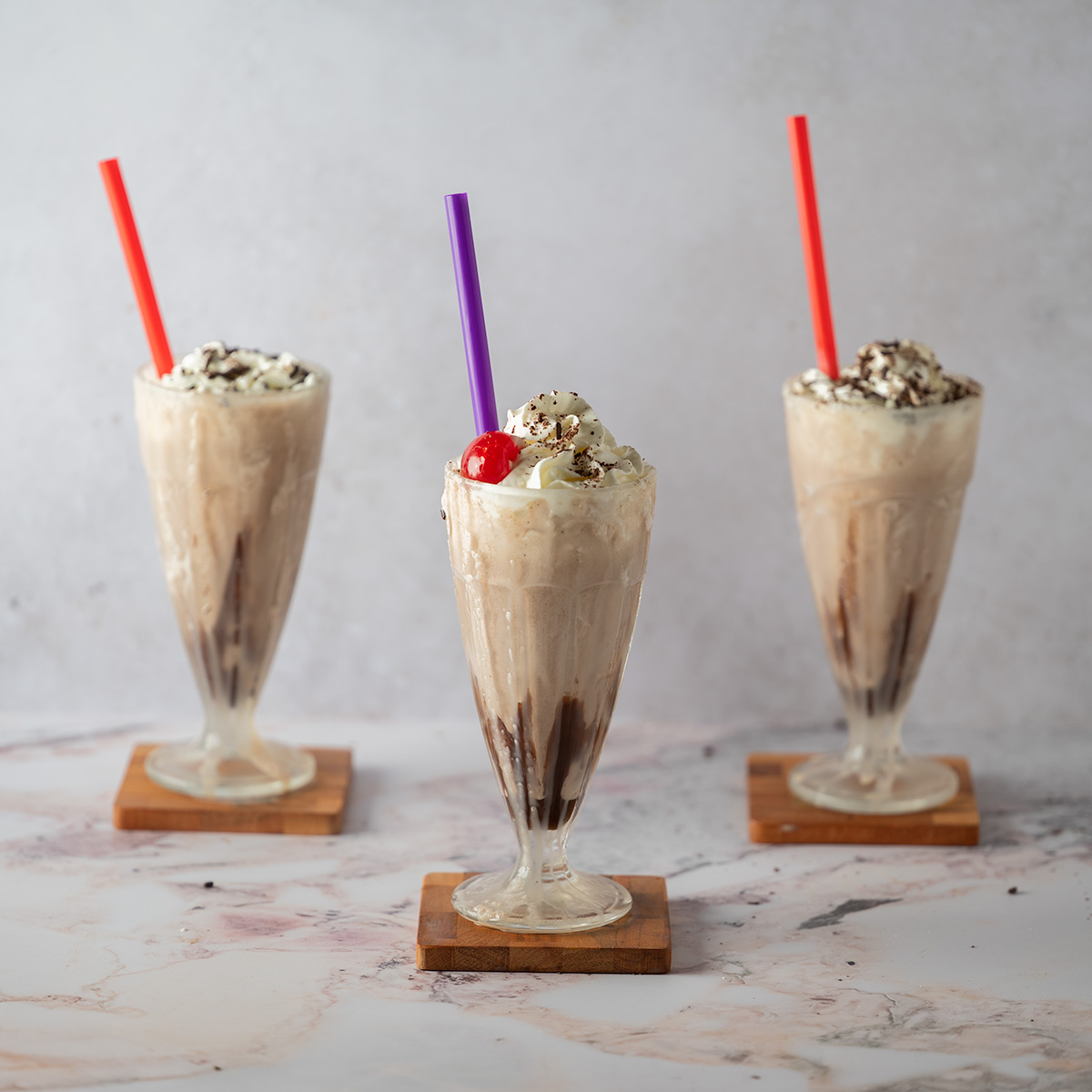
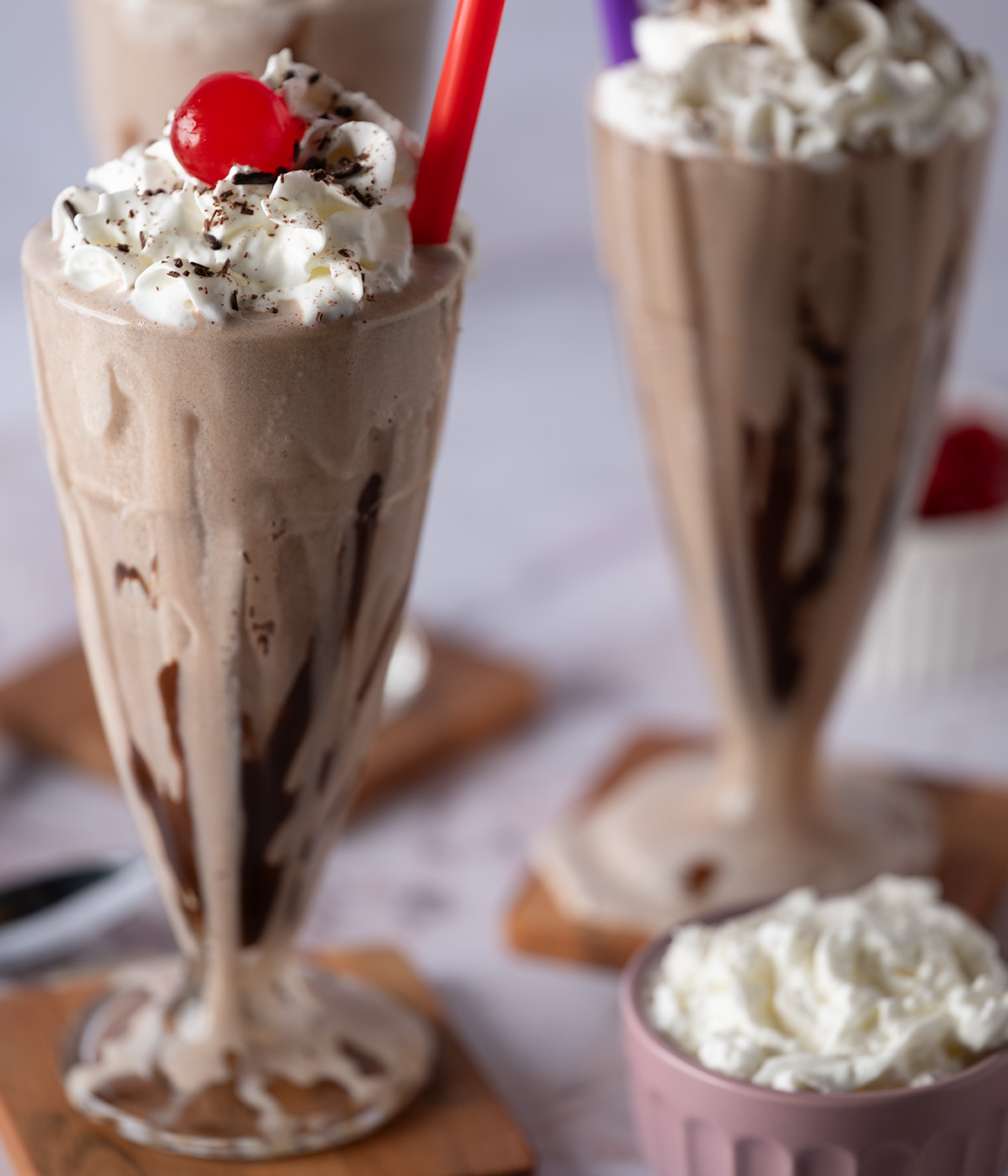
Three thick chocolate milkshakes served with various toppings.

High-quality chocolate ice cream blends with heavy cream (instead of milk) to create a thick, decadent milkshake that is totally customizable!

Three thick chocolate milkshakes served with various toppings.

My love of chocolate knows no season. While everyone else might only let themselves indulge in a milkshake during the hotter summer months, I bask in my inappropriateness of either ordering or whipping up my own milkshake any time of year. And yes, this works the opposite way as well, where I can be found drinking a piping hot mug of hot chocolate in scorching summer heat.

No, you’re weird!

But I quickly grew weary of the fast-food style milkshakes that use a gritty, premade mix that really lacks in flavor. I keep waiting and waiting to be hit with that pow! of chocolate, but it never hits that crescendo. And while I have luckily found some amazing restaurants in my area that do milkshakes right (read, thiccccc and creamy and exploding with chocolate flavor), I don’t always have the time for a sit-down experience.

Enter: my own recipe for the thickest, creamiest shake I could produce that has a real cocoa taste and a smooth, decadent mouthfeel. I promise, you’ll be looking for any excuse to whip up this recipe once you try it!

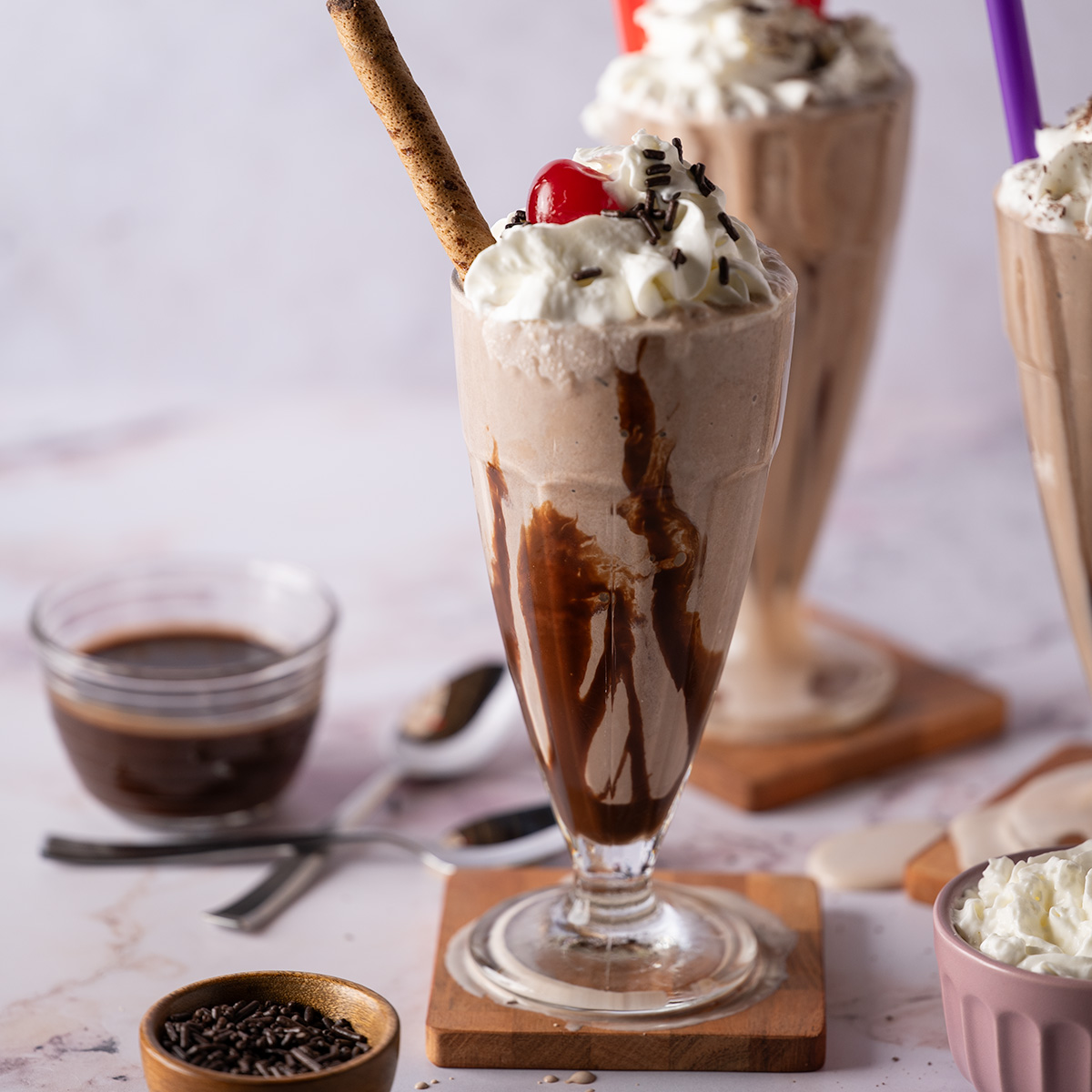
A thick chocolate milkshake with a chocolate Pirouette.

What is a Milkshake?

Arguably one of the easiest desserts you could make, a milkshake is a combination of milk and flavored ice cream that is blended into a rich, creamy consistency that you can sip through a straw. Enjoy a shake as-is, or feel free to dress it up with toppings and flavors of your choosing. Blend up frozen fruit, squirt in some flavored syrup, pile high with whipped cream — the only limit is your imagination!

How to Make a Chocolate Milkshake

As mentioned above, while you can use any flavor of ice cream and toppings to make a shake, I of course prefer mine to be as chocolaty as possible! Therefore, I recommend using a high-quality chocolate ice cream combined with a full-fat dairy product that provides the thickest texture.

I personally omit any use of any syrup or sauce in the milkshake itself since I find that this actually detracts from the premium flavor of the ice cream. I will instead liberally drizzle a homemade mocha syrup overtop the whipped cream that caps my milkshake, but go ahead and include any sauce in your milkshake if you like.

Three thick chocolate milkshakes staggered on a pink and grey background.

How Do You Make a Thick Milkshake?

Most people prefer a thick milkshake that is just barely drinkable using a straw, and I’m no exception to this rule. In fact, rather than using milk (as the name even suggests), this recipe substitutes heavy cream for milk due to its higher fat content, which lends to a creamier mouthfeel than milk alone.

Another tip is to make sure your ice cream hasn’t already begun to melt. The more melted your ice cream is, the thinner and runnier your shake will be.

Reasons to Make This Recipe Today

  • Saves you money — a gallon of milk and a gallon of ice cream can make LOTS of milkshakes for the same cost as 1-2 shakes from a restaurant.
  • You don’t have to leave your home — you won’t have to leave your house to satisfy that craving!
  • Customize to your precise taste — when you make your own shake, you have complete control over its texture, add-ins, and toppings.
  • Great for all occasions — whip these up for a party with friends, a night in with the family, or for when you just need something indulgent.

Ingredients and Variations

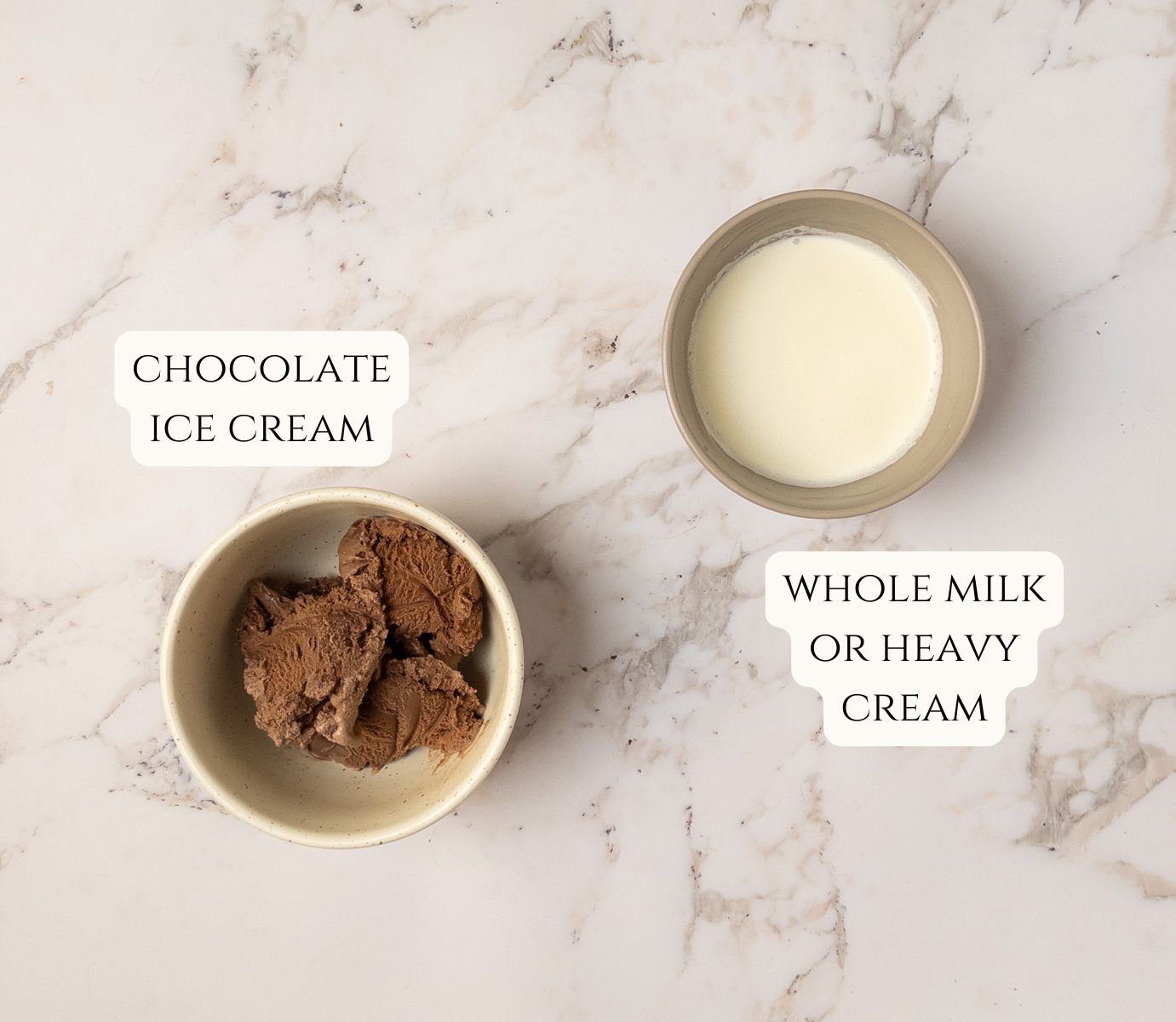
At their core, milkshakes are comprised of just two ingredients, with various toppings being optional.

Ingredients for a thick chocolate milkshake.

Chocolate ice cream — one of the most crucial ingredients! Use a high-quality ice cream since they are made with less artificial ingredients are lend a fuller cocoa taste. Plus, I have found an ice cream like Haagen-Dazs doesn’t melt nearly as quickly, which helps preserve that thicker consistency.

Heavy cream — heavy cream has three to four times the fat content of whole milk, making it an excellent choice for achieving a superior thick and creamy texture. If you don’t have heavy cream, you can easily substitute 1:1 with whole milk, which has a higher fat content than skim or nonfat milk for a creamier texture.

Toppings — add any toppings of your choice! Go for whipped cream, syrup, sprinkles, candy, cookies and wafers, or anything else you like.

Tips for Success

  1. Chill the glass in the freezer for 15-20 minutes. This helps keep the ice cream from melting too quickly and ruining whatever texture you’re trying to achieve.
  2. Take the ice cream out about five minutes before you’re ready to use it so it softens slightly, but not so much that it has already begun to melt.
  3. Add the heavy cream or milk a little bit at a time so that you can measure the consistency as you blend.
  4. You can either use a traditional blender or an immersion blender to make the shake. I like to use an immersion blender so I can have better visibility and control over the final product.
  5. Blend for a limited amount of time. The longer you mix, the thinner the end result will be.
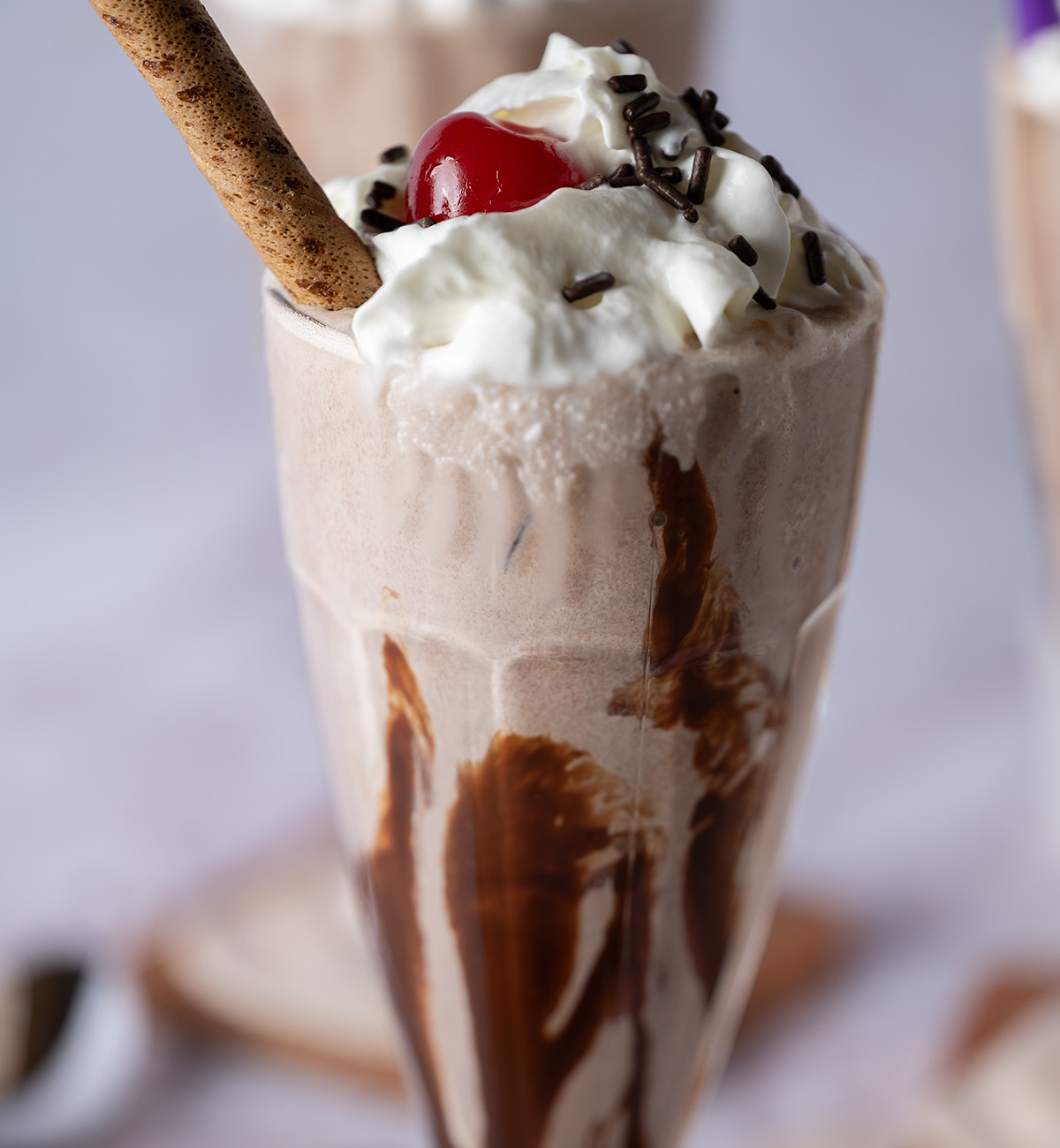
A thick, dripping chocolate milkshake.

Storage Instructions

Since ice cream is never the same once it is refrozen, we don’t recommend making these ahead of time. Instead, prepare and serve immediately.

Video

Perfectly Thick Chocolate Milkshake

High-quality chocolate ice cream blends with heavy cream (instead of milk) to create a thick, decadent milkshake that is totally customizable!

  • milkshake glass, chilled
  • digital scale
  • tablespoon or ice cream scoop
  • cocktail shaker
  • immersion blender
  • 8 ounces premium chocolate ice cream
  • 4 ounces whole milk or heavy cream
  • Various toppings (optional)
  1. Chill the glass in the freezer for 5 minutes. (Optional): line the glass with chocolate syrup, then return to the freezer for a further 5 minutes. Meanwhile, leave the ice cream to thaw slightly on the counter while you collect your favorite toppings.

  2. Scoop 8 ounces of ice cream into the cocktail shaker, stream in 4 ounces of whole milk, then use the immersion blender to blend to your desired consistency. Top with whipped cream, sprinkles, cookie crumbles, chocolate syrup, and more!

Dessert, Drinks, Snack

Filed Under: Cold Drinks, Drinks

Genuine Hot Cocoa

September 30, 2024 by Abigail Leave a Comment

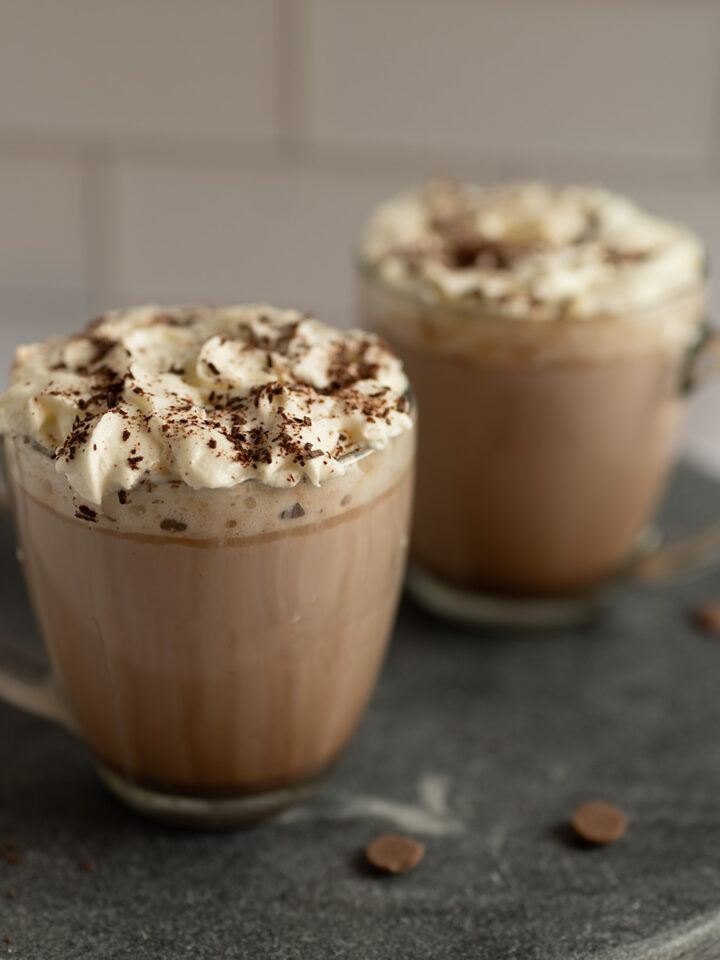
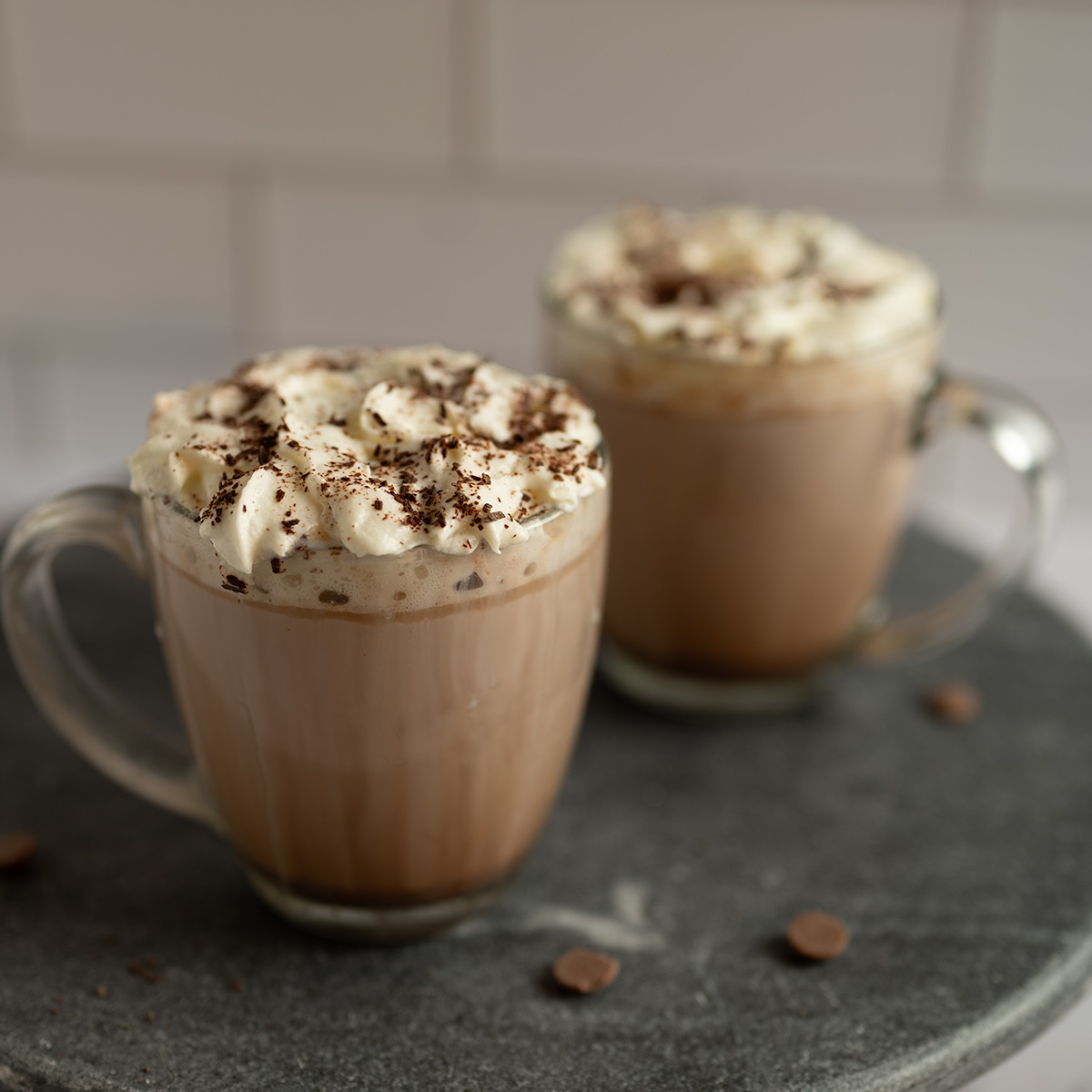
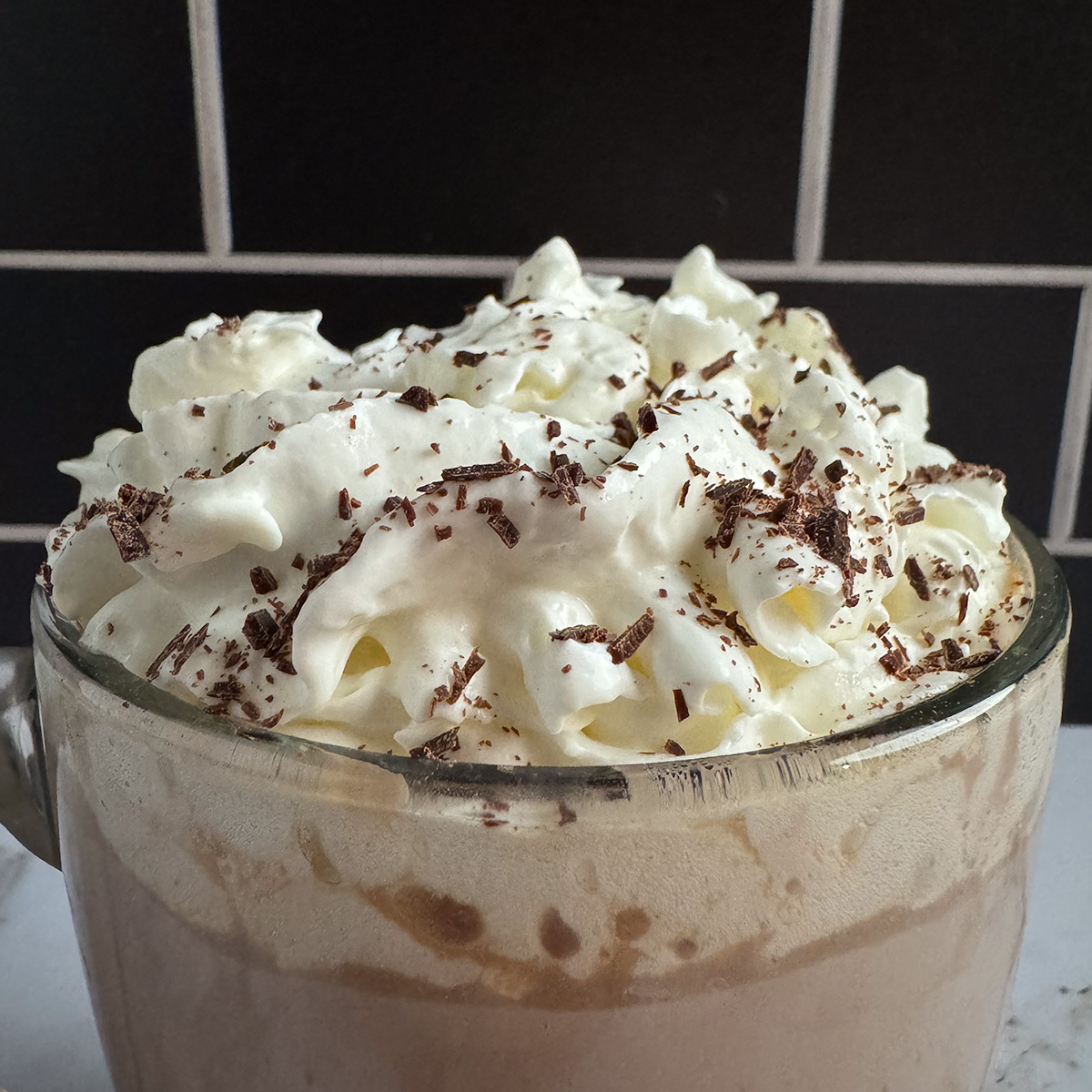
Two clear mugs of freshly-made hot cocoa topped with whipped cream and chocolate shavings.

Toss out your Swiss Miss — this hot cocoa recipe uses whole milk, cocoa powder, and real chocolate for an intense chocolate flavor with no added sugar for a mug of cozy comfort.

Two clear mugs of freshly-made hot cocoa topped with whipped cream and chocolate shavings.

I’ll be frank: I loathe American hot chocolate. The stuff sold at Starbucks is far too bitter, the local coffee shop down the street only offers it with a sickeningly-sweet marshmallow syrup, and don’t get me started on Swiss Miss and Nestle cocoa mixes. Y.U.C.K.!!!

So then why-oh-why did I create a recipe for hot cocoa if it has historically been a colossal letdown?

At the risk of sounding bougie–or worse, a poser–I found out what real hot cocoa tasted like once my husband and I went overseas to London. On our first morning there, he needed his daily caffeine fix, so we stopped at a local Pret a Manger for him to order a cappuccino. While there, he asked if I wanted a hot cocoa from the menu.

After first laughing and then realizing he was serious, I dreadfully ordered a cup to go. I took my first sip with a wince, expecting the usual excessive bitterness or syrupy sugar…but it never happened. Instead, I was met with a pure, unadulterated cocoa flavor and a delicious, frothy consistency.

I have been chasing that dragon ever since.

This recipe is the culmination of all of the best qualities of European-style hot cocoa: a thicker texture with an unapologetic, unsullied chocolate flavor. And for fear of gilding the lily, I sometimes treat myself to a few swirls of whipped cream and some freshly-grated chocolate shavings from a premium chocolate bar.

What is Hot Cocoa?

Although used interchangeably in the United States with the term “hot chocolate,” “hot cocoa” and hot chocolate are, in fact, different drinks. In Belgium, “hot chocolate” refers to placing a piece of real chocolate into a mug and pouring hot milk overtop and stirring to dissolve. “Hot cocoa” refers to a hot beverage that uses cocoa powder as a base.

How to Prepare Hot Chocolate

Many people in the United States are like me in that they have childhood memories of adding boiling water to their Swiss Miss or Nestle hot cocoa mixes on cold winter days. Real hot cocoa should never taste watered-down! Rather, it should rich and creamy and full of chocolate flavor.

To that end, hot cocoa is traditionally a mixture of cocoa powder, hot milk, a sweetener like sugar or vanilla extract, and topped with marshmallows.

For our recipe, we go a step further and dial up the flavor even more by including baking espresso and bits of real chocolate mixed in.

Reasons to Make this Recipe Today

You have 5 minutes — seriously, this drink comes together in five minutes or less. What other reason do you need!?

No added sugar — so many other hot cocoa recipes, I find, feature LOADS of added sugar. No need! With quality ingredients and using vanilla extract to offset any bitterness of the cocoa powder, you won’t find yourself reaching for the sugar with this drink.

You’ll never go back to the box mixes again — this might be a con or a pro, depending on how you look at it. But having new, higher standards for yourself is always a good thing! Don’t settle for the powdered, watery mixes with rock hard mini marshmallows ever again (unless that’s just your thing, of course).

Customize to your liking — without the confines of a premade mix or syrup, you have full control over the flavor profiles. Make it as sweet, bitter, or salty as you please!

Ingredients

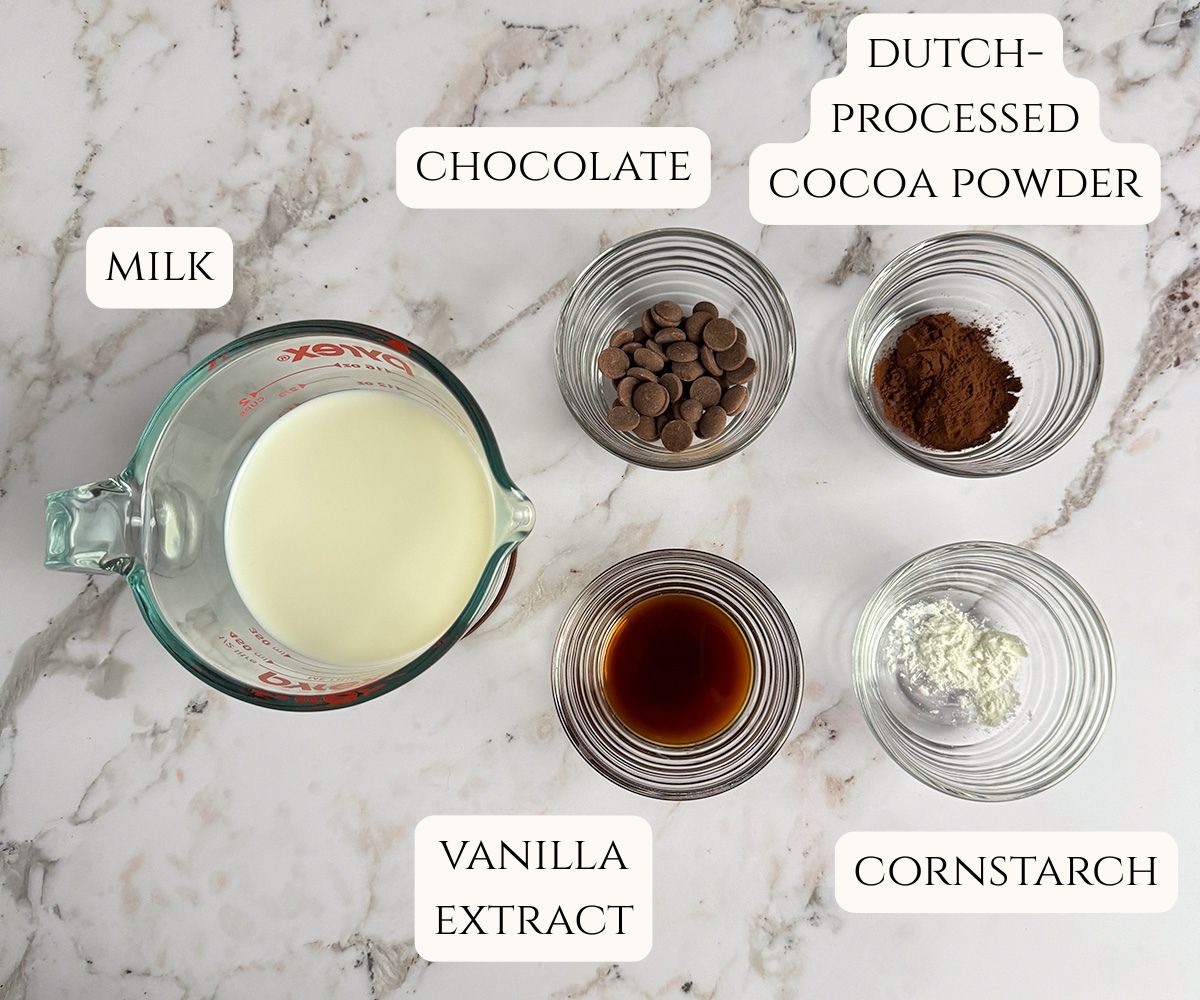
Ingredients for hot cocoa.

Dutch-Processed Cocoa Powder — you can also use regular unsweetened cocoa powder, but I find that the Dutch-processed variety provides a deeper cocoa flavor.

Hot Whole Milk or Heavy Cream — we use whole milk for the thickest, creamiest texture, but feel free to use skim or nonfat dairy options, as well as non-dairy substitutes like almond milk. Just know that using anything other than whole milk or cream will produce a thinner consistency.

Real Chocolate — we use Belgian coverture chocolate, but feel free to use any real chocolate you like. Break apart bits of a Ghirardelli bar, for instance, and watch them melt into creamy deliciousness.

Vanilla Extract — chocolate and vanilla go hand-in-hand, but did you know that vanilla extract actually enhances chocolate’s flavor? Plus the vanilla

Baking Espresso — similar to vanilla, espresso enhances cocoa’s natural flavor profiles. And if you’re looking for a more mocha flavor, you can increase the amount of baking espresso.

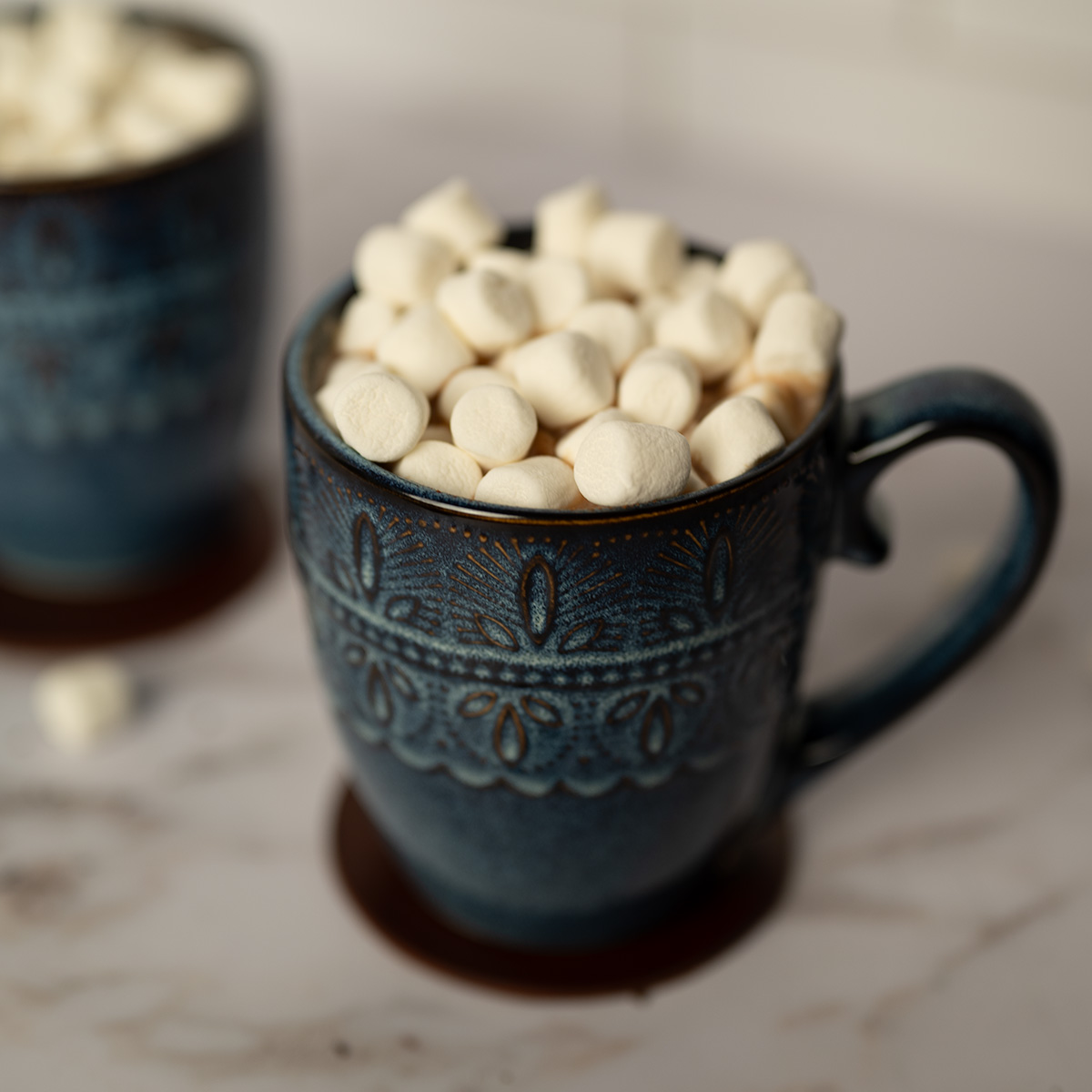
Marshmallows and/or Whipped Cream — while these toppings aren’t included in Europe, it is common for those in the United States to top their hot cocoa with a pile of mini marshmallows that soften as you drink. Alternatively, you can squirt a few swirls of whipped cream overtop for a little added decadence. 😉

Tips for Success

  1. To avoid a “skin” forming on the top once the milk is in your mug, keep the milk’s temperature below 150 F at all times.
  2. Use a whisk when mixing everything together, as this helps prevent graininess by thoroughly incorporating all ingredients.

Detailed Preparation Instructions

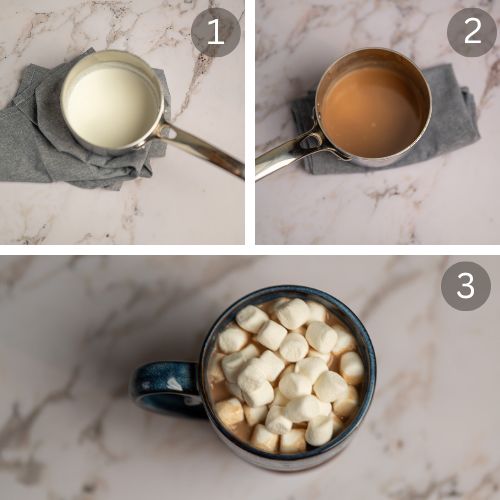
  1. Pour the milk (or cream, if using) into a small saucepan and turn the heat to medium-low. Allow the milk to sit undisturbed for 60 seconds.
  2. Combine all ingredients into the saucepan and whisk to thoroughly incorporate, taking care to remove the pan from the heat before a the milk registers 150 F with a thermometer.
  3. Pour into a mug and top with any toppings, if desired. Serve immediately and enjoy!

Storage and reheating instructions

Hot cocoa is best when prepared and served immediately, so I would not recommend making this drink ahead of time.

And because it happens even to the best of us, if your cocoa gets cold before you finish it, simply pop it in the microwave for 30-60 seconds and enjoy your fully revitalized drink!

Genuine Hot Cocoa

Toss out your Swiss Miss — this hot cocoa recipe uses whole milk, cocoa powder, and real chocolate for an intense chocolate flavor with no added sugar for a mug of cozy comfort.

  • small saucepan
  • whisk
  • digital kitchen scale
  • teaspoon
  • tablespoon
  • 1/4 teaspoon
  • 12 ounces whole milk, hot
  • 2 teaspoons Dutch-processed cocoa powder
  • 1 tablespoon vanilla extract
  • 1 ounce real milk chocolate
  • .5 teaspoon corn starch
  1. Pour the milk (or cream, if using) into a small saucepan. Turn the heat to medium-low and heat the milk undisturbed for 90 seconds.

  2. Combine the cocoa powder, vanilla extract, and milk chocolate in the saucepan and whisk until smooth and no lumps of cocoa powder remain. Add the cornstarch and whisk thoroughly for 60 seconds.

  3. Pour into a mug and add any toppings, if desired. Serve and enjoy!

Drinks
hot chocolate, hot cocoa, hot cocoa recipe, real hot cocoa

Filed Under: Drinks, Hot Drinks

Copyright © 2026 · Foodie Pro 5 on Genesis Framework · WordPress · Log in